
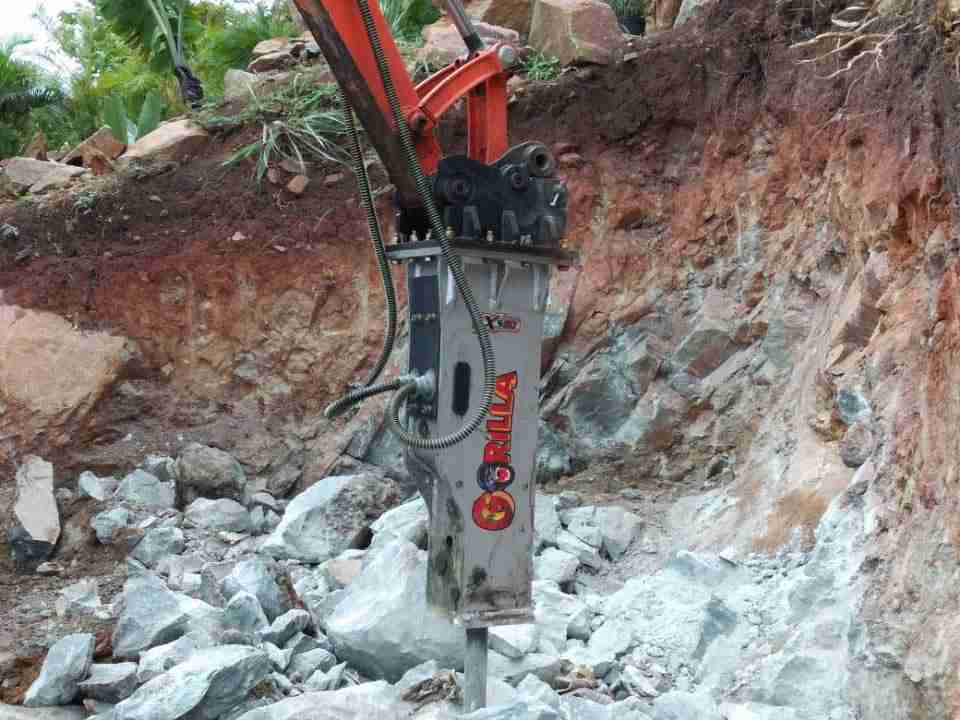
The right breaker attachment for an excavator is crucial for maximizing jobsite productivity by ensuring your equipment operates at peak efficiency for the specific task at hand. Using a correctly matched hydraulic breaker attachment prevents unnecessary wear, reduces downtime, and allows your team to complete demolition and construction tasks faster. As a premier supplier of demolition attachments based in Massachusetts, we understand the demands of job sites across the region.
What should I consider when choosing a hydraulic breaker attachment?
The first thing to consider when choosing a hydraulic breaker attachment is its compatibility with your excavator’s weight and hydraulic flow. An improperly matched breaker can lead to poor performance and even damage your equipment. You need to verify that the carrier, in this case, the excavator, has the appropriate operating weight, oil flow, and pressure to support the attachment. This ensures the excavator breaker attachment works in harmony with your machine, delivering optimal power and efficiency for breaking concrete, rock, or other materials.
How does a breaker’s size and power impact construction equipment productivity?
A breaker’s size and power directly impact construction equipment productivity by determining how effectively it can handle the material you need to break. Selecting the right tool is about more than just power; it’s about applying that power correctly. For example:
- Smaller Breakers: These are ideal for lighter work like residential demolition or utility projects. They are more maneuverable and put less strain on smaller excavators.
- Larger Breakers: Reserved for heavy-duty tasks such as quarry work or large-scale commercial demolition, these models deliver the immense impact energy needed to fracture hard rock and thick concrete efficiently.
Choosing a tool that is either too big or too small for the job will lead to slower progress and increased operational costs.
Why is tool bit selection important for my hydraulic hammer for an excavator?
Tool bit selection is critical because different materials require different types of tools to break them effectively. Using the correct bit for your hydraulic hammer for an excavator not only improves performance but also extends the life of the tool and the breaker itself. A blunt or moil point is excellent for general-purpose demolition and breaking concrete, while a chisel point offers more precision for trenching or quarrying specific lines. Selecting the wrong bit can lead to slow work, premature wear, and potential damage to the attachment’s internal components.
How can I ensure my excavator breaker attachment is properly maintained?
Properly maintaining your excavator breaker attachment is essential for safety and sustained performance, which are key to maximizing jobsite productivity. You should implement a routine maintenance schedule based on the manufacturer’s recommendations. This includes daily visual inspections for leaks or damage, regular greasing of the tool bit, and checking hydraulic connections. Consistent upkeep prevents unexpected failures that can bring a project to a halt. Proper care ensures your equipment is always ready to perform, minimizing downtime and protecting your investment.
Partner with Gorilla Hammers for Your Hydraulic Breaker Needs
At Gorilla Hammers, we leverage our deep industry knowledge to help you select, service, and maintain the ideal hydraulic breaker attachments for your projects. We provide companies throughout Massachusetts and beyond with high-quality equipment and expert guidance to solve their toughest demolition challenges. Our team is dedicated to ensuring you have the right tools to get the job done efficiently and effectively. To learn more about our hydraulic hammers and get started today, contact Gorilla Hammers at (888) 814-6745.