
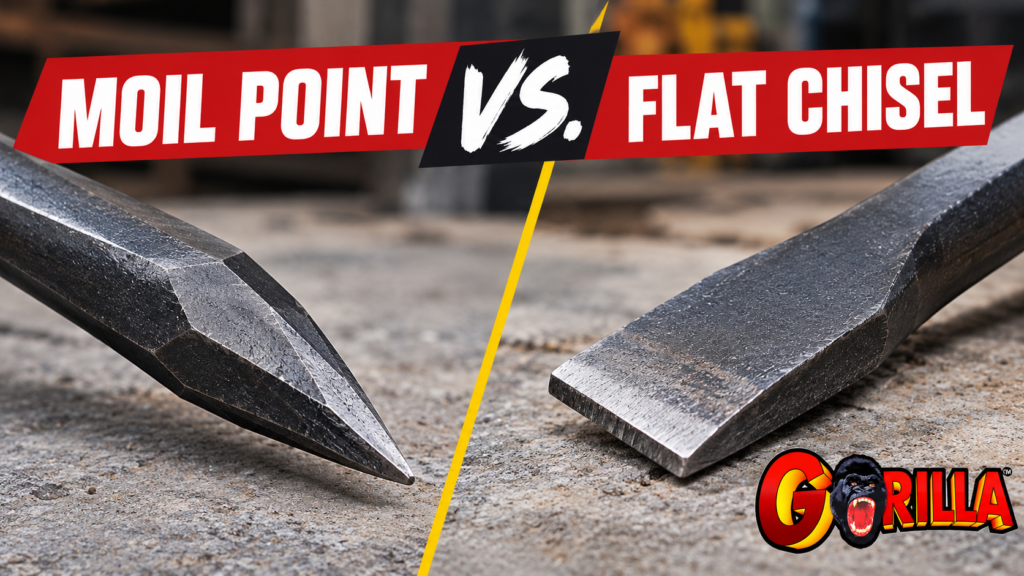
Choosing the right tool bit for a hydraulic breaker can make a difference in how efficiently you complete a demolition, excavation, or rock-breaking project. Moil points and flat chisels are two common options, but their different designs make them better suited for different applications. Understanding how each tool works can help equipment operators select the right attachment for the material and the job. Gorilla Hammers offers hydraulic breaker tooling for a wide range of machines and applications. Before choosing a replacement bit, it helps to understand what separates these two options.
What Is a Moil Point?
A moil point is a pointed hydraulic breaker tool bit designed for general demolition and breaking applications. Its tapered shape concentrates impact at the tip, making it useful for breaking through materials and initiating fractures.
Moil points are commonly used in demolition, quarrying, and other demanding applications. They can be useful for breaking up concrete foundations, working with rock, and handling various heavy-duty demolition tasks. Their pointed design makes them a versatile option when the goal is to penetrate material and begin breaking it apart. Gorilla Hammers carries moil points for a wide variety of hydraulic hammer makes and models. Since tool dimensions and fitment requirements vary, it is important to confirm compatibility with your specific breaker before ordering.
What Is a Flat Chisel?
A flat chisel has a flatter, blade-like working end designed to provide additional cutting action. Rather than concentrating impact at a single point, its shape helps direct force along an edge. Flat chisels are particularly useful for applications such as creating pits in rocky subsoil and separating rock slabs. They may also be appropriate for jobs where controlled cutting or splitting is more important than initial penetration.
For contractors working across different excavation and demolition projects, a flat chisel can offer a practical alternative to a pointed tool. The right choice depends on the material being worked on and the result the operator needs to achieve.
Moil Point vs. Flat Chisel: Key Differences
The primary difference between these tools is their shape and how they apply impact to the material.
A moil point is generally a good option when you need to penetrate material and initiate fractures. A flat chisel is worth considering when additional cutting action or separation along a particular area is required. Neither tool is automatically better for every job. Material composition, project requirements, the hydraulic breaker model, and the machine’s specifications all influence which tool bit is most appropriate. Using a compatible tool designed for the intended application helps support effective operation and avoid unnecessary equipment wear.
How to Choose the Right Hydraulic Breaker Tool Bit
Start by identifying the material you need to break and the type of work involved. Consider whether your project requires general breaking and penetration or more controlled cutting and splitting. Then verify that the tool bit matches your hydraulic hammer’s make and model.
If you are unsure which option will work best, getting advice before purchasing can help prevent fitment issues and unnecessary delays. Gorilla Hammers carries a range of demolition tool bits, including moil points, flat chisels, wide chisels, blunt tools, and other specialized options.
Find the Right Tooling With Gorilla Hammers
The right hydraulic breaker bit depends on your equipment and the demands of your project. Gorilla Hammers helps contractors find compatible tooling for a wide range of hydraulic breakers and heavy demolition applications. Visit Gorilla Hammers online to explore available moil points and flat chisels, or contact the team at 888-814-6745 for assistance identifying the right tool for your machine.